








Nationwide Pseudo People Flow Data Version 3.0 is now available through JoRAS, the joint research platform at the University of Tokyo’s Center for Spatial Information Science (CSIS).
Since 2008, we have provided mobility datasets based primarily on person trip surveys, along with synthetic mobility data. Building on Version 2.0, released in 2024, this latest release improves accuracy and adds a separate dataset covering truck and taxi traffic.
What Is Pseudo People Flow Data?
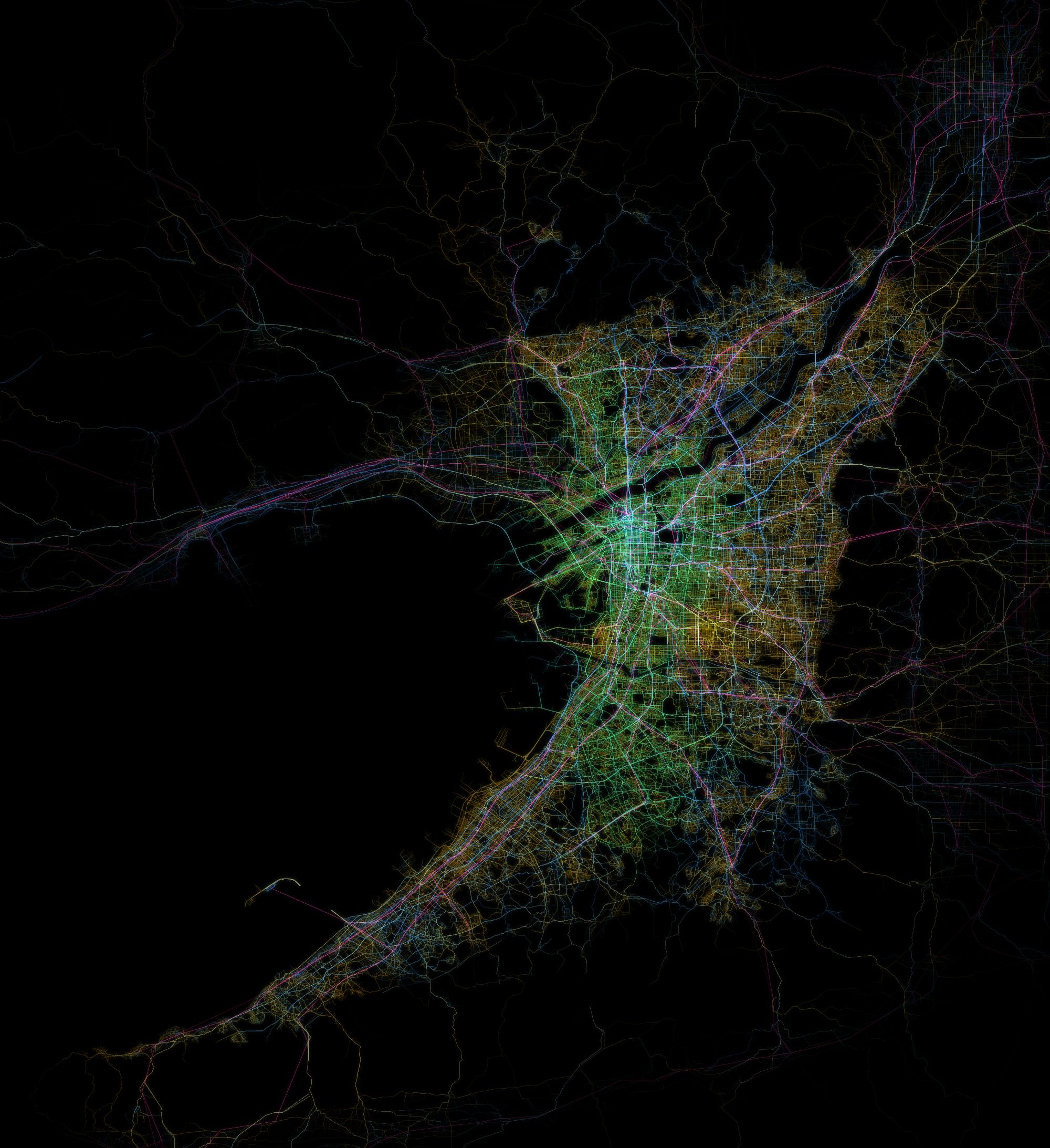
Pseudo People Flow Data is a synthetic mobility dataset that simulates a typical day of activities and travel across Japan. It combines census and household travel survey data with geospatial information, including buildings and road networks, to represent everyday routines—such as commuting to work or school in the morning and returning home in the evening.
The dataset represents a simulated population whose activities and travel patterns reflect statistical characteristics. It does not contain records of actual individuals’ movements.
Why Use Synthetic Mobility Data?
Understanding how people move helps cities plan transportation, public services, and other urban policies. Yet mobility surveys often have limited geographic coverage, are conducted infrequently, and face privacy constraints. These limitations can make it difficult to obtain mobility data for specific areas.
Our nationwide Pseudo People Flow Data helps address these gaps by using available data to model daily activities and travel throughout Japan. It supports research in areas with limited survey data and allows researchers to compare regions using a consistent framework.
What’s New in Version 3.0
・Improved accuracy: Updates to routing, travel mode selection, and data generation improve how well the dataset captures population distributions, travel between regions, and public transit use.
・New truck and taxi data: Business Traffic Data Version 1.0 is now available as a separate dataset that can be used alongside the people flow data.
Learn More and Access the Data
For technical details, see the Version 3.0 specifications.
Browse available datasets in the JoRAS catalog.
To use the data, you must apply through JoRAS. For eligibility requirements and application instructions, visit our document.
——————-
Follow our network: https://linktr.ee/CSISut
共同研究利用システム(JoRAS)に、新たに「全国擬似人流データ ver3.0」が追加されました。
2008年より、パーソントリップ調査を主体にした人の流れデータや擬似人流データを提供してきましたが、2024年の全国擬似人流データ ver2.0に引き続き、今回、業務交通の追加、精度向上等を実現した「全国擬似人流データ ver3.0」をリリースしました。
擬似人流データとは?
擬似人流データは国勢調査やパーソントリップ調査などの統計データや、建物、道路などの地理空間情報を組み合わせ、人々の典型的な一日の活動と移動をコンピュータ上で再現したデータです。例えば、朝に自宅から職場や学校へ向かい、夕方に帰宅する、といった日常の行動が表現されています。実在する一人ひとりの移動履歴をそのまま記録したものではなく、統計的な特徴に基づいて生成した仮想的な人々の活動・移動データです。
都市の様々な施策においては、人々の移動を考慮することが重要です。一方、移動に関する調査には対象地域や実施時期、プライバシー等の制約があり、必要な地域のデータを取得することが難しい場合があります。全国擬似人流データでは、利用可能なデータを基に全国の人々の日常的な活動と移動が生成されています。調査データが限られる地域での分析や、複数の地域を共通の枠組みで比較する研究への活用が期待されます。
ver3.0の主な改良点
・経路探索・交通手段選択やデータ生成処理の改良により、人口分布や地域間の移動量、公共交通利用の再現性を改善。
・人流データと組み合わせて利用できる業務交通(トラック・タクシー)ver.1.0を、別データセットとして新たに提供開始。
データの詳細はver3.0仕様書をご覧ください。
提供データの一覧は、JoRASデータセットページをご参照ください。
データの利用には、東京大学空間情報科学研究センター(CSIS)の共同研究利用システム「JoRAS」を通じた申請が必要です。申請条件および手続きはこちら。
——————-
CSIS公式SNS: https://linktr.ee/CSISut